
Industry: Aerospace

Structural analysis for aerospace.

Independent analysis and senior structural engineering for metallic and composite aircraft structures.

AeroMech supports aerospace programmes where the structural substantiation must connect loads, analysis methods, margins and certification evidence.

Focused analysis for the governing question.

The work can cover static strength, fatigue, damage tolerance, composite structures, finite element analysis and independent review. AeroMech can contribute as a specialist, a second reviewer or a Lead Structural Engineer within the project team.

The aim is not to produce more paperwork, but to provide a clear and traceable engineering conclusion.
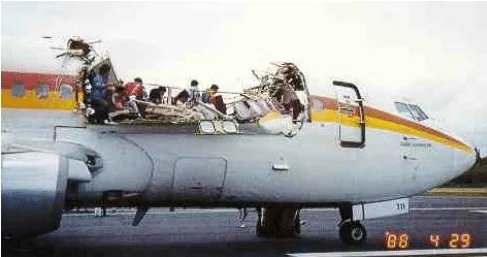
Aloha Airlines Flight 243 fuselage damage after the 1988 accident
FAA photograph of Aloha Airlines Flight 243, public domain in the United States.
Fatigue & damage tolerance

Damage tolerance assumes that defects can exist.

Fatigue analysis estimates how repeated loading consumes structural life. Damage-tolerance analysis goes further: it considers crack growth, residual strength and the inspection interval required to find damage before it becomes critical.

The Aloha Airlines accident is a well-known illustration of why fatigue, damage detection and residual strength must be considered together. The image is used here as an industry example, not as a project reference.

Discuss fatigue and damage tolerance →
Typical engineering questions

Questions AeroMech can help answer.

Is the inspection interval within the practical maintenance schedule?
What causes first-ply failure in the composite part?
Do the FE analysis results reflect the test results?
What coupon tests are required to certify a composite laminate?
Does plate buckling influence the fatigue life?
What is the impact of a shop error on the structure, and how should it be repaired?

Discuss an aerospace structural question.

Share the required decision, available substantiation and the issue that needs independent judgement.

Contact AeroMech