
Structural analysis focused on the engineering decision.
AeroMech analyses complex structures in offshore, aerospace and heavy mechanical engineering.
Static, fatigue and dynamic analysis.
The analysis method follows the physical behaviour and the failure mechanism that can govern the decision.
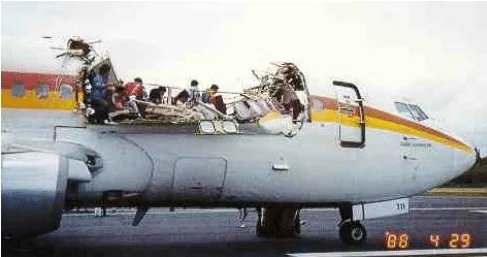
Strength, stiffness and stability.
Static analysis establishes how the structure carries load, where forces flow and which strength or stability limit governs. Depending on the question, the model can range from hand calculations and beam models to detailed shell or solid finite element analysis.
Nonlinear analysis is used when contact, large deformation, yielding or post-buckling behaviour affects the capacity.


Repeated loading can govern the useful life.
Fatigue assessment considers load spectra, stress ranges, local details and cumulative damage. Where cracks or defects must be considered, damage-tolerance and fracture-mechanics methods can be used to evaluate crack growth, residual strength and inspection intervals.
The purpose is not only to calculate a number of cycles, but to support a decision about design, inspection, repair or continued operation.
Aerospace fatigue and damage-tolerance experience →Mass, stiffness, vibrations and transient loading.
Dynamic analysis is required when inertia, vibration or impact changes the structural response. The assessment can include natural frequencies, mode shapes, forced response, dynamic amplification and nonlinear transient behaviour.
The results must be interpreted physically: which mode is excited, how the load travels through the structure and whether the resulting deformation or stress is acceptable.


FEMDS supports structural analysis workflows.
FEMDS is engineering software developed by AeroMech for finite element post-processing, verification and reporting.
Visit FEMDS.com →Which type of analysis is required?
Describe the structure, load case and decision. AeroMech can help determine the appropriate level of analysis.